Wildfire Emergency: Confronting the Escalating Crisis with Drone-in-a-Box Technology
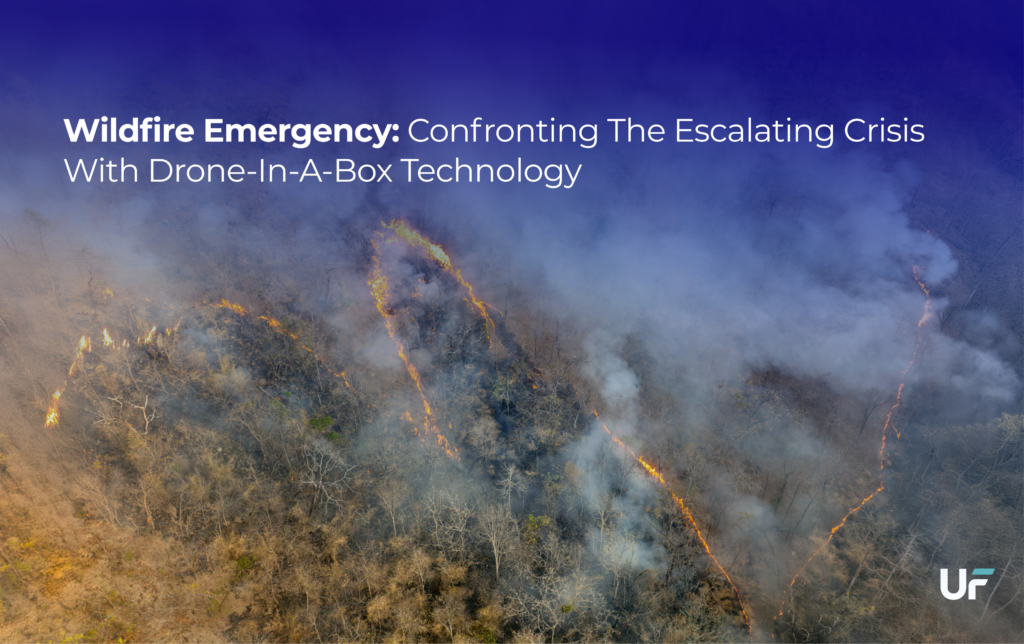
In 2025, wildfires burned more than 1 million hectares across the European Union, making it the most destructive wildfire season ever recorded by the European Forest Fire Information System (EFFIS) since monitoring began. The figure reached 1,079,538 hectares (an area roughly equivalent to the size of Cyprus) with almost twice the area burned compared with the 2006–2024 average. And the emergency is not over: by 8 September 2026, more than 655,000 hectares had already been affected by wildfires across the EU.
Moreover, the scientific consensus is that wildfire risk is expected to further increase across Europe, with some of the strongest increases projected for Mediterranean countries such as Italy, Spain, Greece, and Portugal. The main drivers are higher temperatures, more frequent heatwaves, longer droughts, and longer fire seasons associated with climate change.
In this context, the Unmanned Aircraft Systems (UAS) have the potential to become a true gamechanger in wildfire management. Yet deploying these systems across vast and complex natural environments involves far more than choosing the right technology. In this article, we explore these challenges and how they can be addressed.

The Critical Window: Detecting and Responding to Wildfires Faster
When a wildfire ignites, every minute is critical. Under certain conditions, a wildfire can accelerate from ignition to a near-steady rate of spread within just 20 to 30 minutes, while in wind-driven fires, this acceleration can occur even faster. The window between ignition and a rapidly expanding emergency can therefore be remarkably short. This narrow window can make the difference between detecting a fire while it is still manageable and facing a rapidly expanding emergency.
Indeed, for environmental agencies, local authorities and emergency response organizations, the challenge is not only limited to suppressing wildfires once they occur. Equally important is the ability to detect, assess and respond to emerging threats as quickly and effectively as possible.
Drone-in-a-Box (DiaB) technology is opening up new possibilities for wildfire monitoring and emergency response, by enabling the automatic deployment and operation of drones over large areas, providing timely information when it matters most. In more advanced operational scenarios, drones can also support fire assessment, situational awareness and firefighting activities.
The Strategic Advantage of Drone-in-a-Box
Drone-in-a-Box can provide a solution to the wildfire emergency by enabling responders to assess emerging incidents quickly, identify how a fire is developing and gain a clearer picture of the situation on the ground. Equipped with dedicated optical and thermal sensors, UAS can detect early signs of fire, enabling a faster and more effective response before the situation escalates (Airborne Optical and Thermal Remote Sensing for Wildfire Detection and Monitoring, Vision-based fire management system using autonomous unmanned aerial vehicles).
The ability to deploy a drone immediately when an anomaly is detected can also eliminate delays in gathering critical information, by reducing the time between detection, assessment and intervention, thus giving emergency teams a valuable opportunity to contain a fire before it escalates. The benefit can not only be related to quick response, but also to prevention.
Technologies originally developed for precision agriculture can support wildfire prevention by providing high-resolution information on vegetation health, fuel accumulation and moisture conditions, enabling the identification of areas with elevated fire risk.
Moreover, by reducing the likelihood that small ignitions evolve into large-scale fires, rapid detection systems can also contribute to limiting greenhouse gas emissions and preserving the long-term carbon sequestration capacity of forests, thereby supporting broader climate-change mitigation objectives.
Finally, it is also important to underline that the usage of DiAB translates in improved safety for the emergency team (source: A survey on technologies for automatic forest fire monitoring, detection, and fighting using unmanned aerial vehicles and remote sensing techniques).
The importance on putting into place a robust organisation
While the technology is already available, the real challenge lies in bridging the gap between innovation and operational deployment. Building a reliable wildfire prevention and emergency response ecosystem requires organisations to overcome complex safety, operational, and regulatory challenges.
At Unifly Consulting, we provide end-to-end regulatory, safety, and compliance support to guide organisations successfully navigate every stage of this journey. Our expertise extends far beyond conventional EASA compliance assessments, risk analyses, and preparation of operational documentation. We work alongside operators throughout the entire deployment journey, helping them transform an initial wildfire monitoring or emergency response concept into a safe, authorised, and operationally effective capability.
Our support begins with the development of a robust Concept of Operations (ConOps) tailored to the specific mission, environment, technology, and organisational context. From there, we guide the operator step by step in defining how the system should be integrated into real-world workflows, how missions should be planned and conducted, and how the technology can be used correctly, safely, and effectively under both routine and emergency conditions.
This includes supporting the design and validation of operational procedures, command and control arrangements, organisational structures, roles and responsibilities, communication flows, contingency and emergency procedures, and coordination mechanisms with public authorities and emergency response organisations. We also help operators establish practical arrangements for technology deployment, personnel qualification, system readiness, maintenance, operational oversight, and continuous improvement.
Regulatory compliance and documentation are integral parts of this process, but they are not the end goal. We prepare the necessary operational and safety documentation, conduct risk assessments, and coordinate directly with national aviation authorities throughout the authorization process. At the same time, we ensure that the approved framework remains practical, proportionate, and fully aligned with the operator’s real-world needs.
Our involvement continues through implementation and operational readiness. We support personnel in understanding system capabilities and limitations, translating procedures into effective field practices, validating workflows through practical exercises, and preparing for normal, abnormal, contingency, and emergency scenarios.
In addition, we deliver tailored training programs designed to equip operators, technical personnel, and emergency response teams with the knowledge, practical skills, and operational confidence required to deploy advanced UAS and Drone-in-a-Box solutions safely and efficiently.
By combining regulatory expertise with hands-on operational support, we enable organisations to move beyond authorisation and achieve the safe, correct, and effective use of UAS technology in real-world wildfire prevention, monitoring, and emergency response operations.
Success Story: Authorisation for the Calabria Region
A recent project demonstrates how successful deployment of advanced UAS capabilities can translate in concrete results. The project was developed through a collaboration between Dron-e (Easy City Srls), the Calabria Region’s operational partner for UAS activities in forest firefighting (AIB), and Unifly Consulting, which supported the Region in the development and operational deployment of the regional-scale Drone-in-a-Box system for wildfire monitoring and emergency response.
Our involvement extended throughout the entire project lifecycle, from defining the operational concept and deployment strategy to supporting the practical integration of the technology into real-world emergency management activities. We worked to establish operational workflows, define procedures, responsibilities, and safety processes, and ensure that the system could be deployed effectively across a wide range of geographic and environmental conditions.
To enable flexible and scalable operations, we developed a framework allowing the operator to assess and validate local conditions whenever a base station is relocated. This approach ensured that the system could be safely and efficiently deployed across the region while maintaining a consistent level of operational readiness and safety.
Alongside this operational support, we prepared the necessary safety and regulatory framework, coordinated the authorization process, and worked with the relevant stakeholders to ensure that the proposed operating model was both compliant and practically achievable. As a result, the Calabria Region obtained ENAC Generic Authorization No. ITA-OAT-00174/000, enabling region-wide operations.
The Calabria project illustrates the importance of combining innovative technology with a robust operational framework, effective procedures, trained personnel, and a clear implementation strategy. When supported by the right operational, organizational, and regulatory foundations, Drone-in-a-Box solutions has become a powerful and efficient tool for enhancing wildfire prevention, situational awareness, and emergency response capabilities at territorial scale.
Reflecting this rapid public-sector adoption, fire departments and forestry agencies account for over 38% of the global firefighting drone market share (Global Market Insights, 2024; Grand View Research, 2024), underscoring the growing institutional reliance on automated aerial systems to safeguard communities and environment.
About Unifly Consulting
Unifly Consulting, part of the Unifly Group, provides regulatory, operational, and technical expertise to drone operators, manufacturers, and other stakeholders across the drone ecosystem. Backed by Unifly’s leadership in UAS Traffic Management technology, Unifly Consulting helps clients navigate complexity and build safe, compliant, and scalable operations.
For more information, visit www.unifly.aero
For more information, please contact us at info.consulting@unifly.aero
Recent Posts