Drones and EU Advanced Air Mobility: Di-PEGASUS Concludes under Unifly Consulting’s Coordination
On 5 November 2026, Villa Palestro in Rome hosted the Final Event of the EU-funded Di-PEGASUS project, bringing together industry, academia and European institutions to discuss how Advanced Air Mobility (AAM) can be integrated into European airspace.
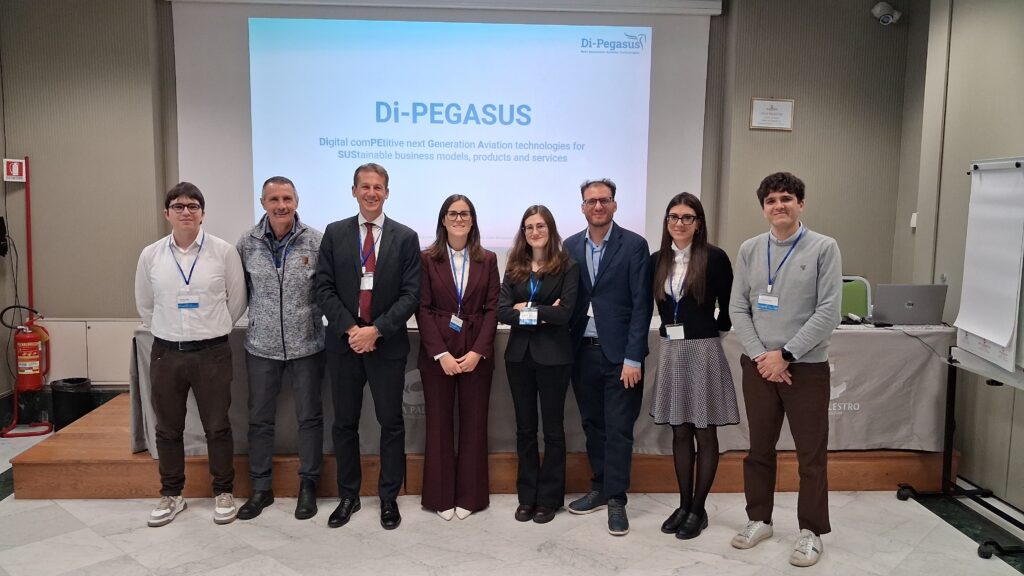
After a three-year collaboration between industrial partners, research centres and aviation stakeholders, Di-PEGASUS has reached the end of its activities. The project, coordinated by Unifly Consulting under the legal name of EuroUSC Italia, addressed the conditions needed to move emerging aviation technologies from research and development towards practical, sustainable applications. The event opened with a welcome from Marco Ducci, Director of Unifly Consulting and Project Coordinator, who introduced the project’s context and the goals of the day.
With the end of the project, we celebrate the result of three years of work together, and we look at what comes next. For drones and Advanced Air Mobility to fulfil their promise, technology, regulation and public acceptance must advance together. Di-PEGASUS was built on this principle: bringing these elements together within a shared vision.
Marco Ducci, Director of Unifly Consulting
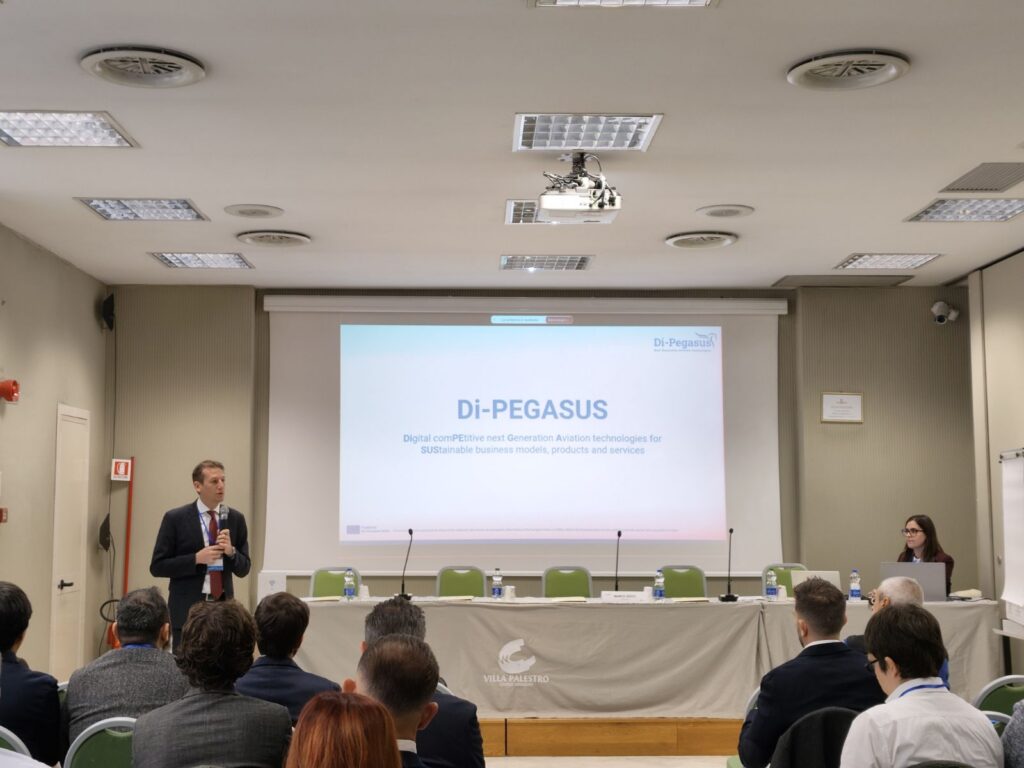
Technology and deployment
The morning sessions explored the broader context for AAM development, connecting European priorities for sustainable aviation with market perspectives and technological progress.
Estanislao Parczewski Cruz, Project Officer at CINEA, provided insights into the European perspective on the transformation of aviation towards greater sustainability, thus framing Di-PEGASUS within the wider European strategy for innovation and the development of new mobility solutions.
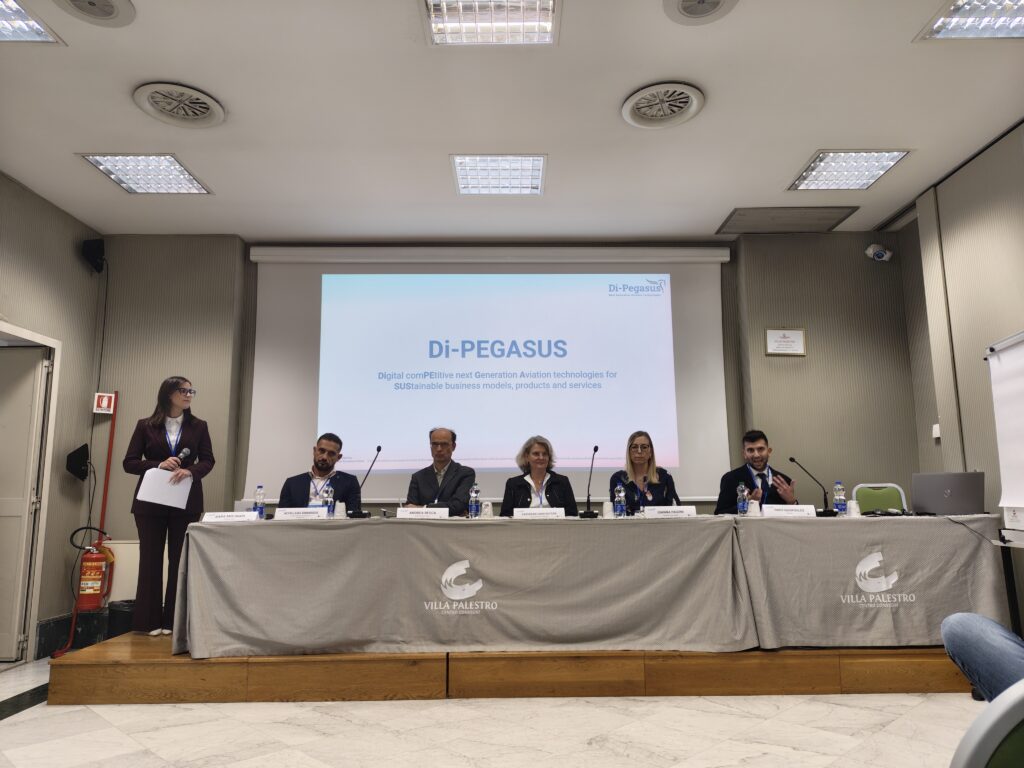
The consortium then presented the project’s technological achievements, including solutions developed by Collins Aerospace and the Centre for Research & Technology Hellas, demonstrations of the Human-Machine Interface (HMI) by RINA Consulting, and the Impact Assessment Platform developed by Capgemini Portugal. The programme also included a presentation of the REG4IA-TER project and the PINGSENSOR Drone proof of concept, highlighting the potential of remote sensing technologies and data processing for territorial intelligence.
The afternoon focused on the gap between technological maturity and operational deployment, featuring two panels:
The first, “From Vision to Deployment: Concrete Use Cases for Sustainable Aerial Mobility”, moderated by Unifly Consulting Technical Manager Sara Molinari, explored emerging use cases and business models, bringing together perspectives from Deep Blue, the University of the Aegean, Safran Electronics & Defense, the Emilia-Romagna aerospace sector and the Greek Ministry of Infrastructure and Transport.
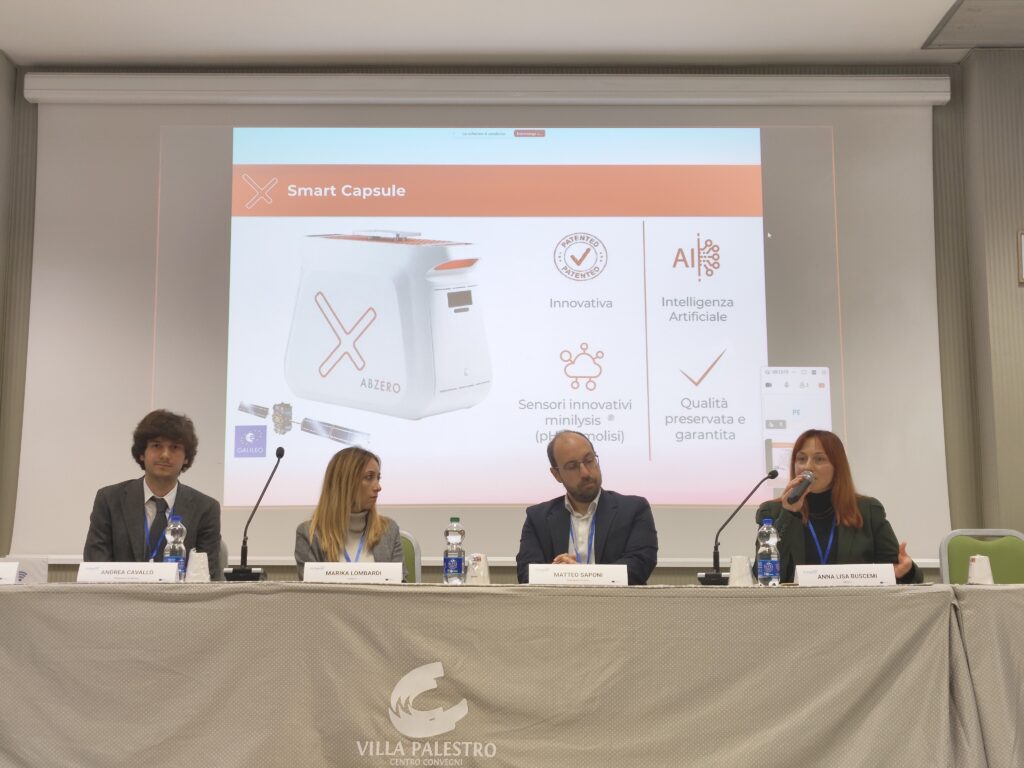
The second panel, “Enabling AAM Deployment: Market Uptake, Public Acceptance and System Integration”, moderated by Unifly Consulting Director Marco Ducci, addressed three key dimensions of the sector’s development: market adoption, public acceptance and integration with existing infrastructure and aviation systems. Contributions came from ABZero, Overspace Aviation, UrbanV and Politecnico di Milano.
A key message: AAM is an ecosystem
The discussion made clear that AAM is not a purely engineering challenge. Technical feasibility depends on three concurrent pillars:
- Physical and digital integration: ground infrastructure such as vertiports, embedded in existing urban mobility.
- Economic sustainability: business models that can last beyond research funding.
- Public acceptance and trust: engaging communities on safety, privacy and noise.
Bringing drone manufacturers, infrastructure operators, regulators and market analysts into the same room showed that fragmentation can be overcome only by treating AAM as an interdependent ecosystem rather than a sum of isolated innovations.
Di-Pegasus has identified the need to work on these three pillars. The results and findings of the project can certainly help to better address some of the challenges in AAM
Estanislao Parczewski Cruz, Project Officer at CINEA
Unifly Consulting’s contribution
As Project Coordinator, Unifly Consulting was responsible for the overall coordination and implementation of Di-PEGASUS, ensuring that project activities progressed in line with the objectives and roadmap established by the consortium.
Its contribution included supervising and monitoring the implementation of the project’s use cases, coordinating the partners’ activities and supporting the assessment of the social acceptance of emerging AAM solutions. This work involved dedicated surveys and workshops designed to gather perspectives from both citizens and aviation professionals.
The project reflects Unifly Consulting’s broader expertise in aviation regulation and safety. With extensive experience supporting the development and safe integration of innovative aviation operations, the company contributed its regulatory and technical knowledge to a project addressing some of the fundamental challenges facing the next generation of air mobility.
About Unifly
Unifly is a technology company rooted in aviation, dedicated to enabling autonomous aviation by advancing the safety and efficiency of UAS Traffic Management. The Unifly platform connects authorities, drone operators and stakeholders to digitise and automate airspace management, supporting the safe integration of next-generation aircraft. Through Unifly Consulting, the company combines UTM solutions with recognised regulatory and safety expertise, offering SORA, regulatory guidance and operational strategy, creating a comprehensive ecosystem that powers the future of autonomous aviation worldwide.
For more information, please contact us at press@unifly.aero.
Di-PEGASUS is funded by the European Union under Grant Agreement no. 101096000. Views and opinions expressed are however those of the author(s) only and do not necessarily reflect those of the European Union or CINEA. Neither the European Union nor the granting authority can be held responsible for them.